david bowie eyeball: The Untold Truth Behind His Iconic Eyes
Introduction
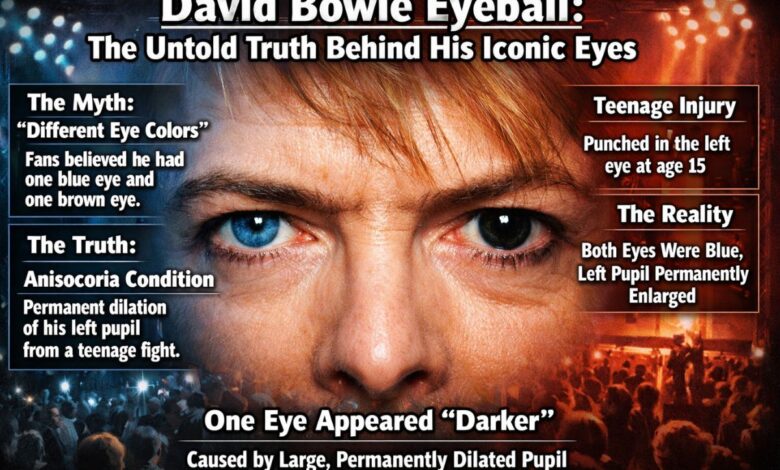
The mystery surrounding the “david bowie eyeball” has fascinated fans, scientists, and pop culture enthusiasts for decades. Many people believe that David Bowie had two completely different eye colors, a rare genetic condition known as heterochromia. However, the truth is far more intriguing and deeply connected to a real-life incident that shaped his appearance forever.
In this article, we will uncover the real story behind David Bowie’s eyes, explain the science behind the illusion, and explore how this unique feature became one of his most recognizable trademarks.
The Myth of Different Eye Colors
What People Commonly Believe
For years, fans believed that David Bowie had one blue eye and one brown eye. This assumption spread widely due to photographs, stage appearances, and his ever-changing artistic persona.
The Reality Behind the Myth
In reality, both of Bowie’s eyes were naturally blue. What made them appear different was not a variation in color, but a difference in pupil size. This condition created a dramatic visual contrast, making one eye appear darker than the other.
The Real Cause: A Teenage Incident
A Life-Changing Fight
The story of the “david bowie eyeball” dates back to Bowie’s teenage years. When he was just 15 years old, he got into a physical altercation with a friend named George Underwood. During the fight, Bowie was punched directly in the left eye.
Permanent Damage
The injury caused severe damage to the muscles responsible for controlling the pupil. As a result, Bowie developed a condition known as anisocoria, where one pupil remains permanently dilated.
Understanding Anisocoria
What Is Anisocoria?
Anisocoria is a condition where the pupils of the eyes are unequal in size. It can occur due to nerve damage, trauma, or other medical conditions.
Key Characteristics
- One pupil appears significantly larger than the other
- The larger pupil reacts poorly or not at all to light
- Vision may be slightly affected, especially in bright environments
Why Bowie’s Eye Looked Darker
Because Bowie’s left pupil was permanently enlarged, it allowed more light to enter and covered more of the iris. This made the eye appear darker, almost brown or black, even though it was actually blue.
The Science Behind the Illusion
How Light Affects Eye Appearance
The size of the pupil plays a major role in how we perceive eye color. A larger pupil reduces the visible portion of the iris, altering the eye’s overall appearance.
Visual Contrast Effect
In Bowie’s case:
- One eye had a normal pupil, clearly showing the blue iris
- The other had a dilated pupil, reducing the visible iris
- This created a striking contrast that looked like two different colors
Impact on David Bowie’s Image
A Unique Signature Look
The “david bowie eyeball” became one of Bowie’s most defining physical features. It added to his mysterious and otherworldly persona, perfectly aligning with his artistic identity.
Influence on Pop Culture
Bowie’s distinctive eyes contributed to his image as a boundary-breaking artist. Whether performing as Ziggy Stardust or appearing in films, his look captured attention and curiosity.
Why It Worked in His Favor
- Enhanced his stage presence
- Added an element of intrigue
- Made him instantly recognizable
Did It Affect His Vision?
Short-Term Effects
After the injury, Bowie experienced temporary vision problems and required medical attention.
Long-Term Condition
Although his pupil remained permanently dilated, Bowie adapted to the condition. However, he did have:
- Increased sensitivity to light
- Slight depth perception challenges
Despite this, it never significantly hindered his career.
Bowie’s Perspective on His Eyes
Turning Flaw into Identity
Rather than hiding his eye condition, Bowie embraced it. He understood that it made him different and used it to enhance his artistic image.
Confidence and Individuality
Bowie’s acceptance of his appearance sent a powerful message about self-confidence and individuality. He proved that what might seem like a flaw can become a defining strength.
Quick Info About David Bowie Eyeball
- Real condition: Anisocoria
- Cause: Eye injury from a teenage fight
- Natural eye color: Blue (both eyes)
- Affected eye: Left eye
- Visual effect: One eye appears darker due to a permanently dilated pupil
- Impact: Became an iconic part of his identity
FAQs About David Bowie Eyeball
Did David Bowie have two different eye colors?
No, both of his eyes were blue. The difference in appearance was caused by unequal pupil sizes.
What caused the change in his eye?
A punch to the left eye during a teenage fight damaged the muscles controlling the pupil.
What is the medical term for his condition?
The condition is called anisocoria, where one pupil is larger than the other.
Did it affect his career?
Not at all. In fact, it enhanced his unique image and contributed to his global fame.
Can anisocoria be treated?
It depends on the cause. In Bowie’s case, the damage was permanent due to trauma.
Why did one eye look brown or black?
The permanently dilated pupil made the eye appear darker by covering most of the iris.
Conclusion
The story of the “david bowie eyeball” is a perfect blend of science, myth, and cultural impact. What many believed to be a rare genetic trait was actually the result of a teenage injury that changed Bowie’s life forever.