behan brendan: The Powerful Story of Ireland’s Fearless Literary Voice
Introduction
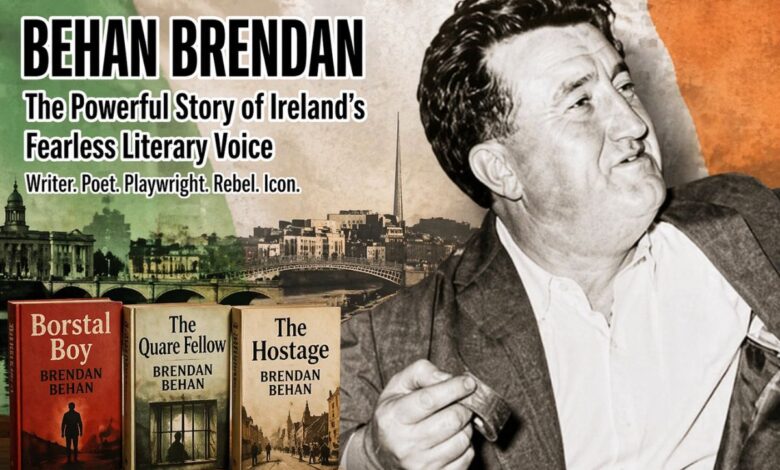
behan brendan is a name often searched by readers who want to learn about Brendan Behan, one of Ireland’s most passionate, rebellious, and unforgettable literary figures. He was a poet, playwright, novelist, short story writer, and Irish Republican activist whose life was as dramatic as his writing.
Brendan Behan became famous for his bold voice, sharp humour, political passion, and honest portrayal of Irish society. His works continue to attract readers because they mix tragedy, comedy, rebellion, and human emotion in a very natural way.
Who Was behan brendan?
Brendan Francis Aidan Behan was born in Dublin, Ireland, on 9 February 1923. He grew up in a strongly political and literary family. From a young age, he was surrounded by Irish history, songs, storytelling, and republican ideas.
Early Life and Family Background
Behan’s family played a major role in shaping his personality. His father was a house painter and former republican prisoner, while his mother was known for her storytelling and strong cultural knowledge. This environment helped Brendan develop a love for words, politics, and Irish identity.
Political Involvement
As a teenager, Brendan Behan joined the Irish Republican movement. His activism led to arrests and imprisonment, experiences that later became important subjects in his writing. Instead of hiding these difficult moments, Behan used them to create powerful literature.
Literary Career of Brendan Behan
Brendan Behan’s writing career was short but highly influential. He wrote plays, books, poems, and stories that made him one of the most important Irish writers of the 20th century.
Brendan Behan Books
Some of the most famous Brendan Behan books include:
Borstal Boy
Borstal Boy is one of his best-known works. It is an autobiographical book based on his time in a youth prison in England. The book shows his growth, struggles, and changing views about people, politics, and life.
The Quare Fellow
The Quare Fellow is a famous play set in a prison before an execution. It explores justice, punishment, fear, and humanity. The play helped Behan gain international recognition.
The Hostage
The Hostage is another major play by Brendan Behan. It combines politics, humour, music, and emotion. The play reflects the tensions of Irish history while also showing Behan’s unique theatrical style.
Writing Style of Brendan Behan
Brendan Behan’s writing was energetic, emotional, and very human. He did not write in a dry or formal way. His work feels alive because he used real speech, humour, songs, and strong characters.
Humour and Tragedy
One of Behan’s greatest strengths was his ability to mix humour with serious themes. Even when writing about prison, death, politics, or suffering, he often added wit and comedy.
Voice of the Common People
Behan gave importance to ordinary people. His characters often came from working-class backgrounds, prisons, streets, and political movements. This made his writing relatable and powerful.
Brendan Behan Quotes
Many Brendan Behan quotes are still remembered because they reflect his wit, honesty, and rebellious personality. His sayings often show humour, intelligence, and a fearless attitude toward life.
Popular Themes in His Quotes
Freedom
Behan often wrote and spoke about freedom, both personal and political.
Life and Struggle
His quotes also reflect the struggles of human life, especially for people living under pressure, poverty, or political conflict.
Humour
Behan was famous for turning serious situations into sharp and memorable lines.
Personal Life and Public Image
Brendan Behan was not only known for his writing but also for his colourful public personality. He became famous in literary circles, theatre communities, and media because of his bold speaking style and unpredictable behaviour.
Fame and Challenges
Success brought Behan international attention, but it also came with difficulties. His struggles with alcohol affected his health and career. Still, his talent remained undeniable, and his legacy continued after his death.
Death
Brendan Behan died on 20 March 1964 at the age of 41. Although his life was short, his impact on Irish literature was very strong.
Why behan brendan Is Still Important Today
The reason people still search for behan brendan is that Brendan Behan remains relevant. His work speaks about identity, injustice, politics, humour, and human weakness. These topics are still important today.
Influence on Irish Literature
Behan helped modern Irish drama become more direct, emotional, and socially aware. His works inspired later writers, playwrights, and artists.
Global Recognition
His books and plays are studied and performed in many countries. Readers appreciate his honest storytelling and dramatic power.
Quick Info About behan brendan
Full Name: Brendan Francis Aidan Behan
Known As: Brendan Behan
Born: 9 February 1923
Birthplace: Dublin, Ireland
Died: 20 March 1964
Profession: Poet, playwright, novelist, short story writer
Famous Works: Borstal Boy, The Quare Fellow, The Hostage
Nationality: Irish
Main Themes: Irish identity, prison life, politics, rebellion, humour
FAQs About behan brendan
Who was behan brendan?
behan brendan refers to Brendan Behan, an Irish poet, playwright, novelist, and political activist.
What is Brendan Behan famous for?
He is famous for works like Borstal Boy, The Quare Fellow, and The Hostage.
What are the best Brendan Behan books?
The best-known Brendan Behan books are Borstal Boy, The Quare Fellow, and The Hostage.
Why are Brendan Behan quotes popular?
Brendan Behan quotes are popular because they are witty, bold, humorous, and full of personality.
What was Brendan Behan’s writing style?
His style was emotional, humorous, political, and based on real human voices.
Conclusion
behan brendan is more than a search keyword; it represents the life and work of Brendan Behan, a fearless Irish literary figure. His books, plays, and quotes continue to inspire readers because they are honest, dramatic, funny, and deeply human. Although he lived only 41 years, Brendan Behan left behind a powerful legacy in Irish and world literature.