helen newlove: The Courageous Voice Who Fought for Victims’ Rights
Introduction
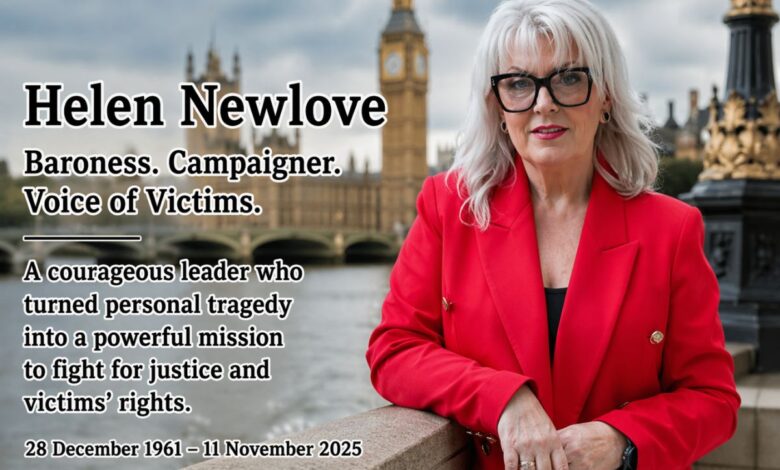
Helen Newlove, also known as Baroness Helen Newlove, was one of the most respected public advocates for victims in modern Britain. Her life story was shaped by personal tragedy, but she transformed that pain into public service, national reform, and a determined campaign for justice. She became widely known after the killing of her husband, Garry Newlove, in 2007, and from that moment onward she devoted herself to speaking up for families affected by violence, antisocial behaviour, and failures in the justice system.
For many readers searching for Helen Newlove, Baroness Helen Newlove, Helen Newlove cause of death, or Helen Newlove children, the reason her story still matters is simple: she represented strength, dignity, and persistence. She was not a career politician who entered public life through party ambition alone. Instead, she became a public figure because she believed victims deserved to be heard, respected, and supported.
Who Was Helen Newlove?
Helen Margaret Newlove was born on 28 December 1961. She later became Baroness Newlove of Warrington in the County of Cheshire, a life peer in the House of Lords. Official parliamentary records identify her full title as The Baroness Newlove and confirm her status as a deceased member of the House of Lords. She was introduced to the Lords in July 2010.
Before her national profile grew, she had worked in legal support roles. That early professional background helped shape her understanding of the justice system, but it was her lived experience as a victim’s family member that gave her public voice a unique emotional power. Her later work combined compassion with direct knowledge of how deeply crime can affect ordinary families.
The Tragedy That Changed Her Life
Helen Newlove’s public journey began after the death of her husband, Garry Newlove, in 2007. He was attacked outside their home in Warrington after confronting youths involved in disorder and vandalism. The loss was devastating, and it pushed Helen Newlove into the national spotlight. What could have remained a private grief became the beginning of a major campaign for safer communities and better treatment for victims of crime.
Turning grief into action
What made Helen Newlove stand out was her refusal to let tragedy define her only as a victim. Instead, she used her platform to campaign against antisocial behaviour, youth violence, and the social damage caused when communities feel abandoned. Her work was deeply personal, but it was never limited to her own experience. She consistently argued that countless families were suffering in silence and needed stronger support from government and public institutions.
Why her message resonated
Her message connected with people because it was grounded in truth, not theory. She understood the pain of bereavement, the stress of navigating the justice system, and the frustration of feeling unheard. That authenticity made her a trusted public advocate and helped turn her into one of the most influential campaigners for victims’ rights in Britain.
Baroness Helen Newlove and Her Public Service
Helen Newlove’s campaigning work led to formal public recognition. In 2010, she was given a life peerage and entered the House of Lords as Baroness Newlove. That appointment reflected the national importance of her voice on crime, community safety, and victim support. It also gave her a platform to influence public policy more directly.
She later served as Victims’ Commissioner for England and Wales from 2013 to 2019. The role was significant because it allowed her to represent the interests of victims at a national level, speak to ministers, review justice policy, and push for reforms that treated victims with more fairness and humanity. Official government material also confirms that she returned to the post in October 2023 and that her term was extended in October 2024.
Her impact as Victims’ Commissioner
As commissioner, Baroness Helen Newlove worked to strengthen the voice of victims across England and Wales. She focused on practical issues such as delays in the courts, support for those facing antisocial behaviour, the need for better communication from authorities, and improvements to the wider criminal justice process. Her work helped keep victims at the centre of national debate rather than at its edges.
A campaigner who kept working
Even in later years, she remained active in public life. Government and commissioner office statements show that she was still serving in the role in 2025, and tributes after her death emphasized that she had continued to work tirelessly for victims until the end of her life. This lasting commitment is a major reason her legacy remains so powerful.
Helen Newlove Cause of Death
Many people search online for Helen Newlove cause of death. Public statements from the Office of the Victims’ Commissioner and tributes published after her passing state that Baroness Helen Newlove died on 11 November 2025 following a short illness. No fuller official medical detail appears in the sources reviewed, so the most accurate public description remains that she died after a short illness.
Her death was met with sadness across public life. Tributes described her as compassionate, courageous, and relentless in her determination to improve the lives of victims. The response to her passing showed how widely respected she had become, not only as a campaigner but also as a person of warmth and conviction.
Helen Newlove Children and Family Life
Another common question is about Helen Newlove children. Public reporting and her own past remarks confirm that she had three daughters. In one parliamentary podcast discussion, she referred to her daughters Amy, Danielle, and Zoe while reflecting on the family trauma that followed Garry Newlove’s killing. Later tributes also referred to her daughters and her husband Paul.
Her identity as a mother remained central to how many people understood her courage. She was not only fighting for abstract justice reforms. She was also protecting the memory of her husband, supporting her children, and trying to create a society where fewer families would have to live through similar pain. That deep family dimension gave her work emotional force and moral weight.
Why Helen Newlove Still Matters
Helen Newlove’s legacy is larger than any single title she held. She showed that lived experience can reshape public debate. She demonstrated that dignity and persistence can influence institutions that often seem distant and unresponsive. Most importantly, she reminded the justice system that victims are not statistics. They are people whose lives are changed forever by crime.
Baroness Helen Newlove will be remembered as a brave woman who turned sorrow into service. Her life stands as an example of public courage, moral clarity, and compassion in action. For anyone looking into Helen Newlove today, her story is not only about loss. It is about leadership, resilience, and the determination to make society more just for others.
Quick Info About Helen Newlove
Key facts
Full name
Helen Margaret Newlove.
Title
The Baroness Newlove, also known as Baroness Newlove.
Date of birth
28 December 1961.
Date of death
11 November 2025.
Cause of death
She died following a short illness, according to official public statements.
Children
She had three daughters.
Most famous role
Victims’ Commissioner for England and Wales.
FAQs About Helen Newlove
Who was Helen Newlove?
Helen Newlove was a British victims’ rights campaigner, life peer, and public servant who became widely known after the murder of her husband and later served as Victims’ Commissioner for England and Wales.
What is Baroness Helen Newlove known for?
Baroness Helen Newlove is known for campaigning on behalf of victims, challenging antisocial behaviour, and helping push victim-focused reform in the justice system.
What was Helen Newlove cause of death?
Official public statements say she died on 11 November 2025 following a short illness.
Did Helen Newlove have children?
Yes. Helen Newlove had three daughters.
When did she join the House of Lords?
She was introduced to the House of Lords in July 2010 after receiving a life peerage.
Did she serve as Victims’ Commissioner twice?
Yes. She served from 2013 to 2019 and then returned to the role in October 2023