gordon craig: The Visionary Who Transformed Modern Theatre
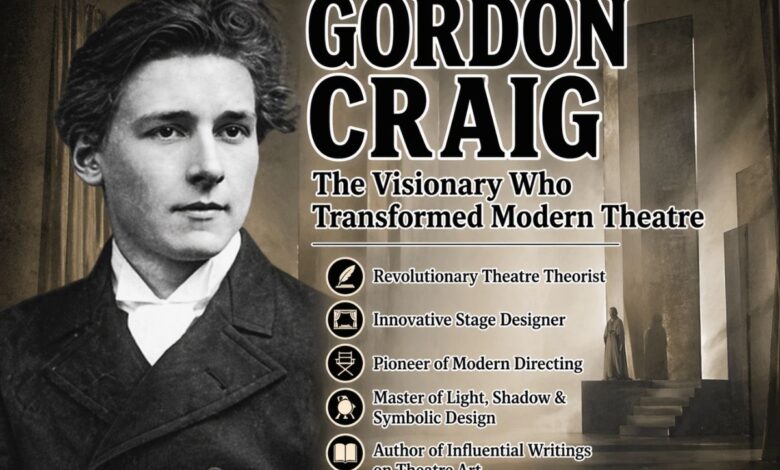
Introduction
gordon craig stands among the most influential figures in the history of modern theatre. Best known as Edward Gordon Craig, he was far more than an actor or stage designer. He was a bold thinker, an artistic reformer, and a man whose ideas changed how theatre was imagined, designed, and performed. At a time when many productions depended on heavy scenery and traditional methods, Gordon Craig introduced a new artistic vision. He believed that theatre should be more symbolic, more expressive, and more unified as an art form.
His work inspired generations of directors, designers, and theatre scholars. Even today, his name is associated with innovation, artistic courage, and the idea that theatre should be a complete visual and emotional experience. This article explores the life, ideas, achievements, and lasting influence of gordon craig in a clear and engaging way.
Who Was Gordon Craig?
gordon craig, whose full name was Edward Henry Gordon Craig, was born on 16 January 1872 in England. He was the son of the famous actress Ellen Terry, and he grew up in a world deeply connected to theatre and performance. From an early age, he was exposed to drama, stagecraft, and artistic life.
Although he began his career as an actor, Craig soon discovered that his real passion lay in the creative and visual side of theatre. He became interested in stage design, production theory, and the role of the director. Over time, he developed ideas that challenged the old ways of making theatre and helped shape modern stage practice.
Early Life and Background
Growing Up in a Theatrical Family
Being born into a respected theatrical family gave gordon craig a unique start in life. His mother, Ellen Terry, was one of the most celebrated actresses of her time. Because of her success, Craig had access to major actors, directors, and productions from an early age.
This background gave him inspiration, but it also placed him under great expectations. He was surrounded by talent and creativity, which pushed him to think seriously about the meaning and purpose of theatre.
His Early Acting Career
Craig first entered the theatre as an actor. He performed in productions connected with the famous actor-manager Henry Irving. While acting gave him practical experience on stage, he did not remain fully satisfied with performing alone. He wanted to shape the entire theatrical experience rather than simply play one role within it.
This desire led him away from acting and toward directing, design, and theory.
Gordon Craig’s Revolutionary Theatre Ideas
The Director as the Creative Leader
One of the most important contributions of gordon craig was his belief that the director should be the main artistic force in a theatre production. In earlier theatre traditions, productions were often dominated by actors or managers. Craig argued that a performance needed a single artistic vision to achieve true unity.
This idea was revolutionary at the time. Today, the central role of the director is widely accepted in theatre, and Craig helped establish that concept.
Theatre as a Complete Work of Art
Craig believed that theatre should combine movement, light, set, costume, and rhythm into one complete artistic expression. He did not want theatre to be only about spoken lines. Instead, he wanted it to communicate through visual beauty, symbolic forms, and emotional power.
He believed that every element on stage should work together. Nothing should feel random or disconnected. This idea helped move theatre toward a more modern and artistic direction.
The Use of Symbolism
Rather than using realistic scenery filled with unnecessary detail, gordon craig preferred symbolic stage design. He wanted sets to suggest mood and meaning instead of copying real life exactly. He believed that simple forms could often express deeper emotions than crowded and literal decoration.
This was one of the reasons why his work felt so modern. He treated the stage as an artistic space, not just a place to imitate everyday reality.
Stage Design and Innovation
The Famous Movable Screens
Craig became especially famous for his use of movable screens. These were large, flexible panels that could be arranged in different ways on stage. Instead of building one fixed set, he used screens to create changing spaces, shadows, and dramatic visual effects.
Why These Screens Mattered
The screens allowed him to:
- create depth and mystery
- shift the mood of a scene quickly
- make the stage look elegant and powerful
- avoid heavy and overly realistic scenery
This approach influenced stage design for many years and remains one of his most remembered contributions.
Light and Shadow in Performance
For gordon craig, lighting was not just a practical tool. It was a creative language. He used light and shadow to shape atmosphere and emotion. Instead of simply making actors visible, lighting became part of the storytelling.
His understanding of visual drama helped future designers see the stage in a more artistic way. In many ways, he helped establish lighting as a serious design element in theatre.
Gordon Craig as a Writer and Thinker
Craig was not only a practitioner of theatre but also an important writer. He expressed his ideas in essays, books, journals, and notes on stage art. Through his writing, he reached people far beyond the productions he personally created.
His Theatre Theory
He wrote about:
- the purpose of theatre
- the role of the director
- the weakness of excessive realism
- the need for artistic unity
- the visual and symbolic power of stage design
His writings became essential reading for serious students of theatre. Even when people disagreed with him, they respected the originality and force of his thinking.
The Idea of the “Über-Marionette”
One of his most debated concepts was the Über-Marionette, or “super-puppet.” Craig felt that human actors could sometimes be too emotional, too inconsistent, or too limited to serve the director’s full vision. He imagined a performer-like figure that could move with perfect control and artistic precision.
While this idea was controversial, it revealed how strongly he believed in theatrical discipline, visual form, and artistic unity.
Major Influence on Modern Theatre
A Lasting Legacy
The influence of gordon craig can be seen in modern directing, stage design, and theatre education. He inspired artists to think of theatre as a serious art form with its own visual language. His work helped shift theatre away from cluttered realism toward abstraction, symbolism, and director-led creativity.
Many later directors and designers borrowed from his ideas, whether in set design, lighting, movement, or stage composition.
Why He Still Matters Today
Craig remains important because he asked big questions:
- What should theatre look like?
- Who controls the artistic vision?
- Should theatre copy life, or transform it?
- How can design carry emotion and meaning?
These questions are still relevant in contemporary theatre, film, and performance studies.
Personal Life and Final Years
gordon craig lived a long and intellectually rich life. He worked in different countries, collaborated with leading artists, and continued writing and reflecting on theatre throughout his later years. He eventually spent much of his life in Europe and remained a respected figure in artistic circles.
He died in 1966, but his ideas survived him. His name continues to appear in theatre history, design studies, and discussions of artistic innovation.
Conclusion
gordon craig was a visionary whose impact on theatre cannot be overstated. He challenged old traditions and introduced a new way of thinking about the stage. Through his symbolic designs, movable screens, theories of direction, and powerful writings, he helped modern theatre become more artistic, more unified, and more expressive.
He was not simply a theatre worker. He was a creative revolutionary. For anyone studying drama, stage design, or the history of performance, Gordon Craig remains a name of lasting importance. His legacy proves that one artist’s imagination can reshape an entire field.
Quick Info About Gordon Craig
Basic Facts
- Full Name: Edward Henry Gordon Craig
- Known As: Gordon Craig
- Born: 16 January 1872
- Died: 29 July 1966
- Nationality: English
- Profession: Actor, stage designer, director, theatre theorist
- Famous For: Modern stage design, symbolic theatre, movable screens, theatre theory
FAQs About Gordon Craig
Who was Gordon Craig?
Gordon Craig was an English theatre designer, actor, director, and theorist who played a major role in shaping modern theatre.
Why is Gordon Craig famous?
He is famous for his revolutionary ideas about stage design, symbolic scenery, lighting, and the central role of the director.
What is Gordon Craig’s full name?
His full name was Edward Henry Gordon Craig.
What did Gordon Craig contribute to theatre?
He introduced new ideas in visual stage design, promoted artistic unity in productions, and helped establish the director as the main creative force.
What were Gordon Craig’s movable screens?
They were large stage panels used to create flexible, symbolic, and visually striking theatrical spaces.
Is Gordon Craig still important today?
Yes, his ideas continue to influence theatre design, directing, and performance theory across the world.