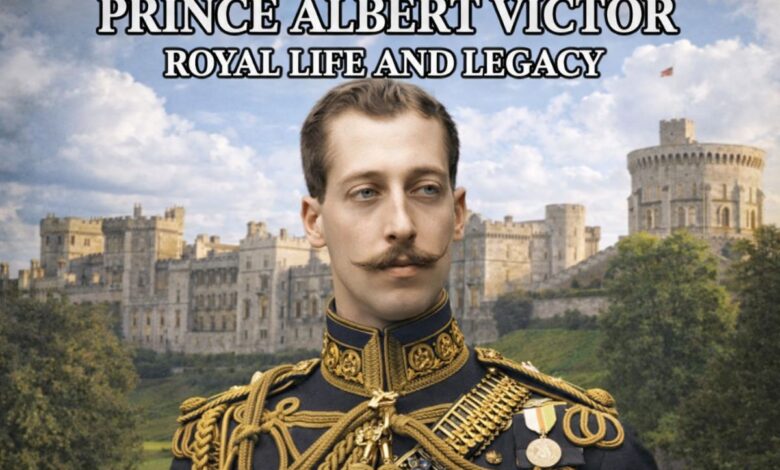
prince albert victor: The Tragic Life of Britain’s Lost Heir
Introduction
Prince Albert Victor, Duke of Clarence and Avondale, remains one of the most talked-about figures in late Victorian royal history. Born into immense privilege and expectation, he was once seen as a future king of Britain. As the eldest son of the Prince and Princess of Wales and the grandson of Queen Victoria, he stood very close to the throne from birth. Yet his life was cut short at just 28, leaving behind unanswered questions, public curiosity, and a legacy shaped by both fact and rumor.
Unlike many royals whose reputations were built through long public service, Prince Albert Victor’s image was formed through a mixture of royal duty, family expectation, social gossip, and later historical speculation. He was known affectionately as “Eddy” within the family, but in public life he carried the heavy burden of being one of the most visible heirs of his generation. His short life has continued to fascinate historians because it sits at the crossroads of monarchy, scandal, and myth.
Early Life and Royal Background
Prince Albert Victor was born on 8 January 1864 at Frogmore House, Windsor. He was the first child of Albert Edward, Prince of Wales, later King Edward VII, and Princess Alexandra of Denmark, later Queen Alexandra. Because his father was the eldest son of Queen Victoria, Albert Victor entered life as second in line to the British throne. This high position made him one of the most closely watched children in the British royal family.
A Childhood Under Pressure
From an early age, Prince Albert Victor was raised with the knowledge that he could one day become king. His upbringing was strict, formal, and shaped by the expectations of the Victorian court. He and his younger brother, Prince George, who later became King George V, were educated together. However, many accounts suggest that Albert Victor struggled more than his brother in academic life. His tutors described him as less focused and slower in his studies, and some historians have linked this to his premature birth and possible hearing or learning difficulties.
His Public Position
Although he did not shine as a scholar, Albert Victor still held an important public role. As a senior royal, he represented the monarchy at major events and traveled widely. In 1890, Queen Victoria granted him the titles Duke of Clarence and Avondale and Earl of Athlone. These honors reflected his importance within the royal family and underlined the expectation that he would continue rising in public life.
Education, Travel, and Public Duties
Prince Albert Victor’s education did not follow a perfectly successful path, but he still received the training expected of a royal prince. He attended Trinity College, Cambridge, and also spent time in the military, which was common for aristocratic young men of the period. His life included official tours that were meant to prepare him for national and imperial duties.
Tour of India
One of the most notable chapters of his public life was his long tour of India in 1889 and 1890. At the time, India was the most important part of the British Empire, and royal visits carried both political and symbolic weight. The tour allowed Albert Victor to build his public image and gain experience in imperial ceremony. He was welcomed by local rulers and attended major events across the subcontinent. For the British establishment, such trips were part of preparing a prince for greater responsibility.
A Prince in the Victorian Spotlight
Despite these duties, Albert Victor never fully escaped criticism. Some members of the political and royal elite doubted whether he possessed the strength, intellect, or discipline needed for the crown. Even so, his status and family connections ensured that he remained central to royal planning. In many ways, his life reflects the tension between personal ability and public expectation that often surrounds heirs to power.
Engagement to Princess Mary of Teck
One of the warmest and most hopeful moments in Prince Albert Victor’s life came with his engagement to Princess Mary of Teck. Their engagement was announced in late 1891 and was viewed very positively by the royal family. Mary was considered suitable, dignified, and capable of becoming a future queen. Photographs from the period show the pair together, and the match appeared to offer Albert Victor a stable future after years of public uncertainty.
Sadly, the engagement lasted only a short time. Before the marriage could take place, Albert Victor fell seriously ill. After his death, Princess Mary of Teck later married his younger brother, Prince George. That marriage would eventually place her on the throne as Queen Mary, wife of King George V. This twist of history gives Albert Victor’s story an especially tragic tone, because he stood so close to a future that never arrived.
Death and the End of a Royal Future
Prince Albert Victor died on 14 January 1892 at Sandringham House, just days after his 28th birthday. He died during the influenza pandemic that spread through many parts of the world in the late nineteenth century, and he developed pneumonia. His death shocked the royal family and the public. For a prince once expected to inherit enormous responsibility, his sudden passing changed the path of British history.
His death meant that his younger brother, Prince George, moved closer to the throne. George would later succeed as King George V and become one of the central royal figures of the twentieth century. Because Albert Victor died unmarried and had no legitimate children, his dukedom became extinct. In practical and symbolic terms, his death closed a chapter before it had the chance to fully begin.
prince albert victor jack the ripper: Rumor vs Reality
One reason Prince Albert Victor remains widely searched online is the phrase “prince albert victor jack the ripper.” Over time, conspiracy theories claimed that he was somehow linked to the Whitechapel murders of 1888, either as the killer or as part of a wider royal cover-up. These stories became sensational because they mixed royalty, scandal, and one of history’s most infamous unsolved crimes.
Why the Theory Became Popular
The theory gained attention largely because Albert Victor was already surrounded by gossip during his lifetime and because later writers turned those rumors into dramatic narratives. Stories involving secret marriages, political cover-ups, and hidden royal scandals made for exciting reading, even when the evidence was weak. As a result, his name became attached to one of the darkest legends in Victorian history.
What Historians Say
Serious historians and major reference sources do not treat the theory as credible. Britannica notes the continuing uncertainty around Jack the Ripper’s identity rather than endorsing sensational royal claims, while historical accounts discussing Albert Victor state that claims linking him to the murders are widely dismissed. Surviving records and timelines have been used to argue that he could not have been the killer. In simple terms, the phrase may be popular in search engines, but it does not rest on strong historical proof.
Legacy of Prince Albert Victor
Prince Albert Victor’s legacy is unusual because it is defined more by possibility than achievement. He never became king, never married, and never had the chance to build a long public career. Yet he remains memorable because of what his life represented: the fragile uncertainty of royal succession. Had he lived, Britain’s royal history might have looked very different.
Today, he is often remembered as Britain’s “lost heir,” a prince whose life was overshadowed by expectation, rumor, and early death. His story continues to attract readers because it combines royal glamour with human vulnerability. Behind the title and ceremony was a young man living under enormous pressure, and that makes his story still compelling today.
Quick Info About Prince Albert Victor
Basic Facts
Full Name
Albert Victor Christian Edward
Born
8 January 1864, Frogmore House, Windsor
Died
14 January 1892, Sandringham House, Norfolk
Parents
Albert Edward, Prince of Wales, and Alexandra of Denmark
Best Known Title
Duke of Clarence and Avondale
Nickname
Eddy
FAQs About Prince Albert Victor
Who was Prince Albert Victor?
Prince Albert Victor was the eldest son of the future King Edward VII and Queen Alexandra, and the grandson of Queen Victoria. He was once second in line to the British throne.
Did Prince Albert Victor become king?
No. He died in 1892 before Queen Victoria and before his father became king.
Was Prince Albert Victor engaged?
Yes. He was engaged to Princess Mary of Teck shortly before his death.
Did Princess Mary of Teck marry him?
No. After Albert Victor died, she later married his younger brother, the future King George V.
Was Prince Albert Victor Jack the Ripper?
There is no solid historical evidence proving that claim, and the theory is widely dismissed by historians.